
Skip to content

Pediatric Dental Sealants

A simple solution to shield your child’s permanent teeth from decay and cavities.

A child sits in a dental chair, pulling a playful face by stretching their lips, wearing a striped sweater with yellow accents. Dental tools are visible.
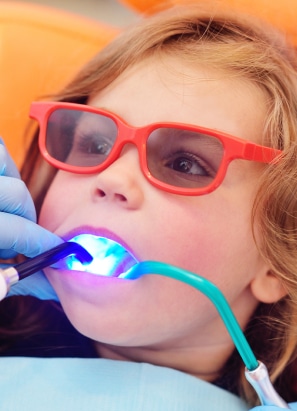
A child wearing red glasses receives dental treatment, featuring bright dental lights and tools held by a gloved person in a dental clinic.

Understanding dental sealants

Sometimes brushing is not enough, especially when it comes to those hard-to-reach spots in your mouth. It is difficult for your toothbrush to get in-between the small cracks and grooves on your teeth. If left alone, those tiny areas can develop tooth decay. Sealants give your teeth extra protection against decay and help prevent cavities.

Dental sealants are plastic resins that bond and harden in the deep grooves on your tooth’s surface. When a tooth is sealed, the tiny grooves become smooth and are less likely to harbor plaque. With sealants, brushing your teeth becomes easier and more effective against tooth decay.

The sealant application process

Sealants are typically applied to children’s teeth as a preventive measure against tooth decay after the permanent teeth have erupted. However, adults can also receive sealants on healthy teeth. It is more common to seal “permanent” teeth rather than “baby” teeth, but every patient has unique needs, and your dentist will recommend sealants on a case-by-case basis.

Sealants last from three to five years, but it is fairly common to see adults with sealants still intact from their childhood. A dental sealant only provides protection when it is fully intact, so if your sealants come off, let your dentist know, and schedule an appointment for your teeth to be re-sealed.

The Benefits of sealants

Essential protection for children’s teeth.


  • Effective Decay Prevention: Sealants provide a physical barrier that keeps out harmful bacteria and food.
  • Long-lasting Protection: With proper care, sealants can protect teeth for many years.
  • Non-Invasive Procedure: Applying sealants is a quick, pain-free process with no drilling or removal of tooth structure.
  • Saves Time and Money: By preventing cavities, sealants reduce the need for fillings, crowns, or caps later on.
  • Ideal for permanent teeth: Especially beneficial for those who are at higher risk of tooth decay.

Caring for sealants

Sealants require no special care beyond regular brushing and flossing. Regular dental check-ups are important to monitor the sealants and reapply them if necessary.

Are sealants right for your child?

Sealants are a great option for most children and teenagers, particularly those prone to cavities. They are most effective when applied as soon as the permanent teeth come in, so we recommend discussing this preventive treatment at your child’s next dental visit.

Seal the deal against cavities

Give your child the advantage against tooth decay. Discuss with your pediatric dentist today.